
Overview: The Microfinance Industry Network (MFIN) plans to issue guidelines encouraging lenders to use Permanent Account Number (PAN) and Central Know Your Customer (CKYC) records alongside voter ID. The proposal aims to improve borrower identification and credit underwriting, with an aspirational 18-month transition target.
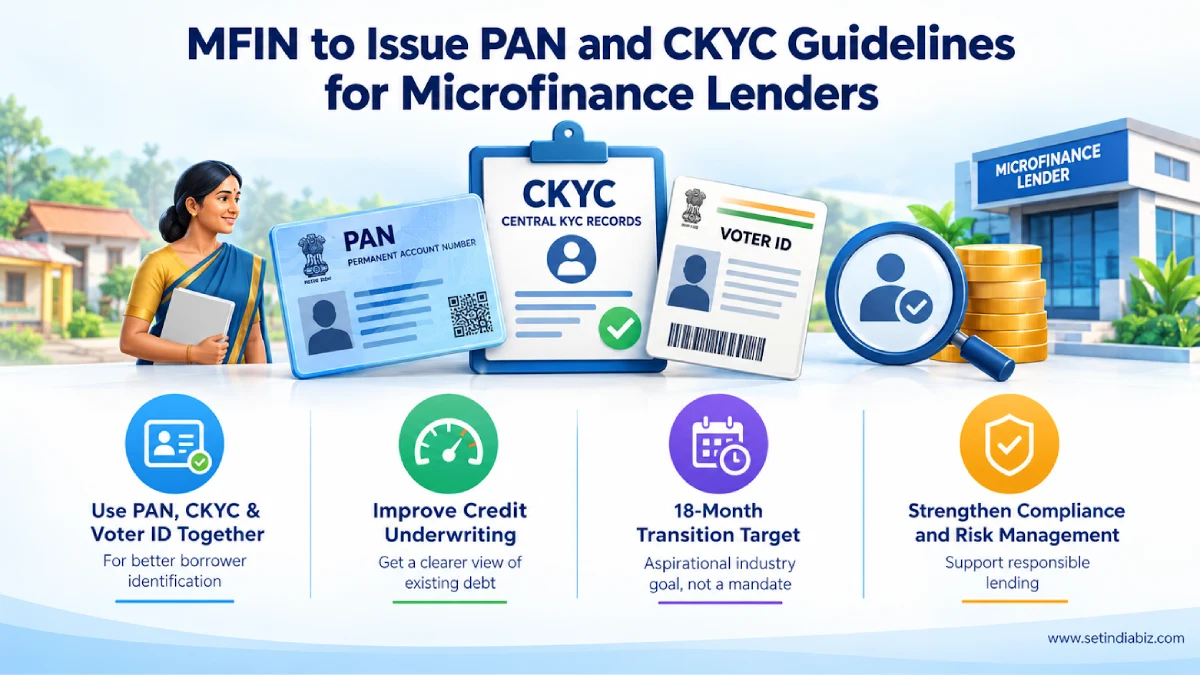
Microfinance lenders may find it difficult to assess a borrower’s total debt when microfinance and retail loan records rely on different identification methods. Microfinance Industry Network CEO Alok Misra has announced plans for guidelines encouraging lenders to use PAN and CKYC alongside voter ID. The proposal could improve credit checks before fresh loans are approved.
A borrower’s existing debt can be difficult to assess when microfinance and retail lending records rely on different identification methods. This creates a risk that lenders may not get a complete picture of outstanding loans before approving fresh credit.
What Will the Proposed Guidelines Change?
MFIN is expected to issue the guidelines within 10-15 days of its announcement, according to a Business Standard report. Borrowers, holding multiple voter IDs, make it difficult for lenders to establish their identities and assess total indebtedness. Retail loans are commonly linked to PAN, which can help lenders identify credit exposure beyond microfinance borrowing. CKYC infrastructure could also improve identity matching.
The proposed approach aims to help lenders connect borrower records more consistently and assess existing retail and microfinance loans before disbursement. Voter ID will remain part of the proposed identification process; MFIN’s announcement called for using PAN and CKYC alongside it.
The 18-month transition period is an aspirational industry target, not an RBI-mandated deadline.
Existing MFIN and RBI Requirements
MFIN’s Guardrails 2.0, issued in November 2024, introduced stricter underwriting standards for its member NBFC-MFIs. The lender cap took effect on 1 April 2025, while the expanded indebtedness cap and delinquency restriction were scheduled from 1 January 2025. These are MFIN industry requirements that supplement RBI regulations.
- Lender limit: A borrower may have microfinance loans from no more than three lenders. Retail loans do not count towards this limit.
- Indebtedness cap: Outstanding microfinance and unsecured retail loans, including the proposed loan, must not exceed ₹2 lakh. Secured retail loans are excluded from this cap.
- Delinquency restriction: A microfinance provider should not disburse a loan if the borrower has a loan with a regulated entity that is more than 60 days past due and has over ₹3,000 outstanding at underwriting.
MFIN also requires voter-ID e-validation for credit bureau checks and directs members to pursue PAN seeding for borrowers.
What Lenders Should Prepare For
Lenders should review identity matching, credit bureau checks and indebtedness assessments while awaiting MFIN’s final guidelines. They can assess how PAN and CKYC records may fit into existing processes, along with any technology changes and staff training required once the final guidance is available.
Setindiabiz Support
Setindiabiz supports businesses planning to enter the microfinance sector with company incorporation and applicable corporate compliance. Depending on the proposed structure and activities, this may include microfinance company registration or assessing whether a Section 8 company structure for microfinance activities is appropriate. Applicable registration and compliance requirements should be assessed before lending operations begin.
FAQs
On 26 October 2026, MFIN said it expected to issue them within 10–15 days. As of 28 October, the sources checked did not confirm their publication.
No. It is an aspirational industry target, not an RBI-mandated deadline.
They could help lenders match borrower identities and assess credit exposure across microfinance and retail lending more effectively.
MFIN’s proposed guidelines seek to close gaps in borrower identification and credit assessment across microfinance and retail lending. Lenders should await the final guidance while continuing to follow applicable RBI requirements and existing MFIN guardrails.
