
Overview: Chief Economic Adviser (CEA) V. Anantha Nageswaran has called for a review of Special Mention Account (SMA) norms for micro, small and medium enterprises (MSMEs). He argues that a uniform overdue-payment timeline does not reflect the different cash-flow cycles of businesses. SMA classification can also affect a borrower’s credit standing before a loan becomes a non-performing asset (NPA). His remarks have not changed the existing Reserve Bank of India (RBI) rules.
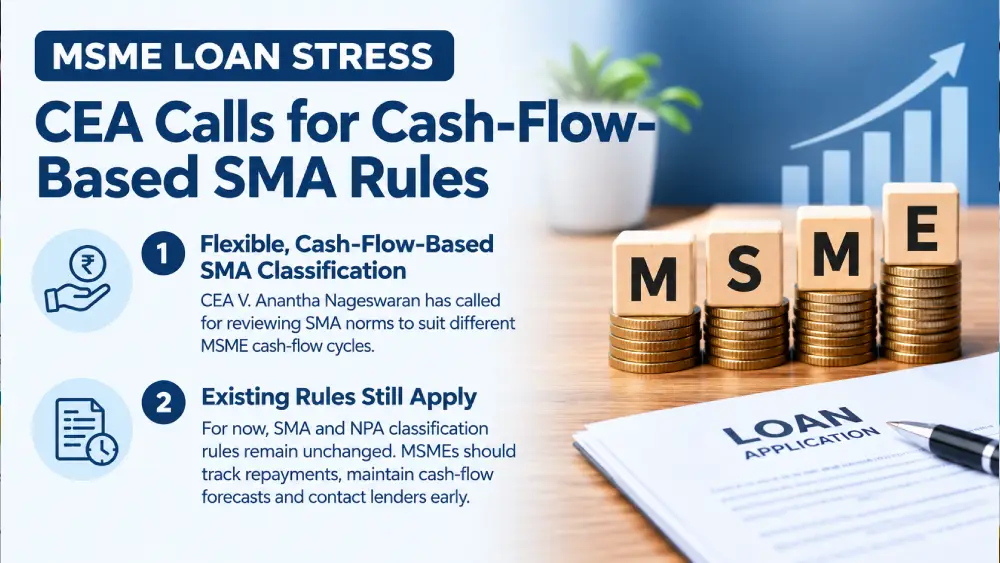
Chief Economic Adviser (CEA) V. Anantha Nageswaran has called on the Reserve Bank of India (RBI) to review the loan-classification norms applied to MSMEs. He said the rules should reflect the cash-flow patterns and working-capital needs of Indian businesses, rather than follow a uniform timeline.
A delay in customer payments can leave an MSME short of funds to repay a loan on time. The resulting loan classification may affect its ability to secure further credit. The CEA’s latest remarks raise a key question: should lenders assess repayment stress against the cash-flow patterns of different businesses?
What Is the CEA Proposing?
Speaking on Inclusive Growth at a conference in New Delhi, the CEA called for a review of the norms governing overdue MSME loans. He argued that businesses across sectors have different working-capital needs and cash-flow cycles. A uniform timeline may not suit every enterprise. He also warned that an SMA classification can leave a borrower effectively facing consequences similar to those of an NPA.
The proposal is intended to bring loan-classification norms closer to actual business conditions. Any change, however, would require formal regulatory action.
How Are MSME Loan SMA Categories Classified?
Under the general RBI framework, lenders classify loan accounts according to the period for which payments remain overdue.
| Category | General classification |
|---|---|
| SMA-0 | Amounts overdue for up to 30 days |
| SMA-1 | Amounts overdue between 31 and 60 days |
| SMA-2 | Amounts overdue between 61 and 90 days |
| NPA | Generally, dues remain overdue for more than 90 days |
SMA categories flag repayment stress before an account reaches NPA status. Different criteria apply to certain facilities, including cash-credit and overdraft accounts, while agricultural advances may follow crop-season-based rules.
What Should MSMEs Do Now?
The CEA’s proposal does not give businesses extra time to repay loans. Existing loan terms and applicable classification rules continue to apply.
MSMEs should take four practical steps:
- Track receivables: Follow up on delayed customer payments before they disrupt loan repayments.
- Forecast cash flow: Map expected receipts against instalments, interest and working-capital requirements.
- Keep records updated: Maintain invoices, bank statements and financial statements to assess the business’s position.
- Speak to lenders early: Discuss repayment concerns before overdue amounts accumulate.
These steps can help businesses identify shortfalls early and make informed decisions about their working capital.
Why the Proposed Review Matters
A cash-flow-sensitive approach could help distinguish temporary payment delays from deeper financial stress. It may also reduce the risk of viable businesses facing disproportionate credit consequences because of short-term disruptions.
Any revised framework would still need safeguards against the concealment of genuine repayment problems. Until the RBI changes the rules, MSMEs must comply with the existing requirements.
SetIndiaBiz Support
Business compliance should not become another burden on an already stretched MSME. SetIndiaBiz helps entrepreneurs establish their businesses through MSME/Udyam registration and manage related statutory and business documentation. Our professionals handle the relevant registration and documentation requirements, helping business owners keep essential records. A well-organised compliance foundation also makes it easier to keep business information consistent across routine commercial and statutory dealings.
Conclusion
The CEA’s call for a review has put the focus on whether MSME loan SMA norms should reflect different business cash-flow cycles. No regulatory change follows from his remarks alone. Businesses should continue to monitor repayments, maintain reliable records and contact lenders early when cash-flow pressure threatens timely payment.
FAQs
Special Mention Account categories help lenders identify repayment stress. The general categories are SMA-0, SMA-1 and SMA-2, based on the applicable overdue period and classification criteria.
No. OnlyCEA has remarks. His call for a review is a proposal, not a regulatory amendment.
A loan generally becomes a non-performing asset when the relevant dues remain overdue for more than 90 days, subject to the applicable RBI rules and specific exceptions.
The business should review its cash flow, follow up on receivables, maintain accurate financial records and contact its lender early. It should not assume that the proposed review grants additional repayment time.
