
Overview: Indian Global Capability Centres (GCCs) are increasingly focusing on AI upskilling and internal reskilling as artificial intelligence changes routine work and technology roles. A Dell Technologies-Zinnov report estimates that around 55% of routine GCC work is already exposed to AI-driven automation, while 60% of the workforce may require reskilling by 2030. GCCs are responding by developing internal talent, changing hiring strategies and moving towards higher-value technology and business functions.
India’s Global Capability Centre ecosystem is moving beyond traditional support functions as AI changes how global businesses operate. For foreign companies establishing or expanding GCC operations in India, workforce planning is increasingly connected with the right business structure, investment framework and regulatory compliance.
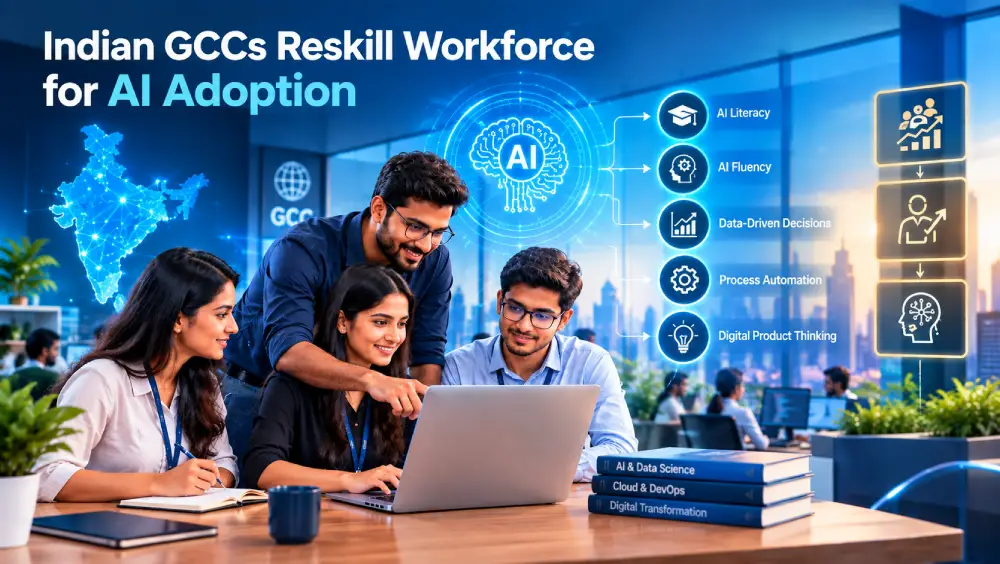
Indian GCCs Expand AI Upskilling and Reskilling
Indian GCCs are increasingly training existing employees in AI literacy, AI-enabled productivity, data-driven decision-making, process automation and digital product thinking, rather than relying only on external technology hiring.
According to a recent Dell Technologies-Zinnov report, around 55% of routine GCC work is already exposed to AI-driven automation, while about 60% of the GCC workforce may require reskilling by 2030. The report points to a shift from repetitive execution towards engineering, product development and business problem-solving.
Companies are responding in different ways. Catalyst Brands India, for example, has described a phased approach beginning with AI literacy and moving towards AI fluency, enterprise-level applications and broader operational transformation. Quess IT Solutions has also highlighted internal mobility, reskilling and role-adjacent development as part of the changing GCC talent strategy.
Hiring strategies are changing as well. Broadridge India claims to have shifted from relying heavily on talent from traditional IT services companies towards engineering-focused organisations, while also expanding campus hiring and developing programmes for younger developers and operations professionals.
The broader trend is therefore not simply about hiring more AI specialists. GCCs are combining existing talent, targeted hiring and structured upskilling as their India operations take on more technology, product and business responsibilities.
What Does This Mean for GCCs in India?
As GCCs move towards higher-value functions, workforce planning is only one part of the India-entry strategy. The business must also consider how the Indian operation will be established, funded and managed.
Depending on the proposed activities and ownership structure, a foreign company may need to assess:
- the appropriate India-entry and corporate structure;
- applicable FDI and FEMA requirements;
- employment and labour-law requirements;
- intellectual property ownership and protection;
- data protection, confidentiality and information-security arrangements; and
- ongoing corporate, tax and regulatory compliance.
For technology-focused GCCs, these considerations can become particularly important when the centre develops software, products, proprietary processes or handles data belonging to the parent company or its customers.
Relevant Compliance for GCCs in India
A foreign company establishing a GCC through an Indian entity must assess the applicable FDI route, sectoral conditions and FEMA requirements before bringing in foreign capital. RBI rules provide that foreign investment in an Indian company is subject to the applicable entry route, sectoral caps and conditions.
Other important areas include:
Business structure: The foreign company should select an appropriate India-entry structure based on the GCC’s activities, ownership and operational requirements.
FDI and FEMA: Where the GCC operates through a foreign-owned Indian entity, the investment structure, funding, applicable FDI conditions and FEMA requirements need to be assessed.
Employment compliance: Employment contracts, payroll, statutory registrations and applicable labour requirements should be addressed for the workforce.
Intellectual property: Software, inventions, technology and other intellectual property developed by GCC employees should be covered through appropriate ownership and contractual arrangements.
Data and confidentiality: GCCs handling employee, customer or group-company information should maintain appropriate data-handling, confidentiality and security arrangements. India’s Digital Personal Data Protection framework and the 2025 Rules are relevant where their provisions apply to the processing of digital personal data.
Ongoing compliance: The Indian entity must maintain its applicable statutory filings, corporate records, tax requirements and other regulatory obligations. Foreign companies operating in India may also have obligations under the Companies Act, depending on their structure and activities.
How SetIndiaBiz Helps
SetIndiaBiz helps foreign companies establish and manage operations in India through India-entry structuring, company incorporation, FDI and FEMA compliance, regulatory documentation and ongoing corporate compliance.
For businesses planning a GCC in India, Setindiabiz support covers entity selection, incorporation, investment structuring, regulatory requirements, FEMA compliance and post-incorporation obligations, helping establish a compliant foundation for long-term operations.
FAQs
Why are Indian GCCs increasing AI upskilling?
GCCs are responding to the growing exposure of routine work to AI-driven automation. Internal reskilling allows organisations to develop new capabilities while making greater use of existing technical and business talent.
How is AI changing GCC roles?
AI is contributing to the evolution of technology roles, with GCCs moving towards areas such as AI engineering, model operations, product development and business-focused technology functions.
What compliance should a foreign company consider when setting up a GCC in India?
Depending on the structure and activities, the company may need to address company incorporation, FDI and FEMA requirements, employment compliance, intellectual property, data protection, confidentiality and ongoing corporate compliance.
Can SetIndiaBiz help with GCC establishment in India?
Yes. SetIndiaBiz provides support for India-entry structuring, company incorporation, FDI and FEMA compliance, regulatory documentation and ongoing compliance for foreign businesses establishing operations in India.
The growing focus on AI upskilling in Indian GCCs reflects a wider shift towards higher-value technology, engineering and business functions. As GCCs reskill existing employees and change their hiring strategies, foreign companies entering or expanding in India need to consider workforce planning alongside the appropriate corporate structure and regulatory framework.
In This Article
Author Bio

Shivani Tyagi
Shivani Tyagi is a legal professional with background in legal research, drafting, and compliance analysis. Skilled in reviewing legal documents, statutory and case law research, she focuses on simplifying corporate legal topics and brings research-driven clarity to Setindiabiz's compliance-focused blogs.
