
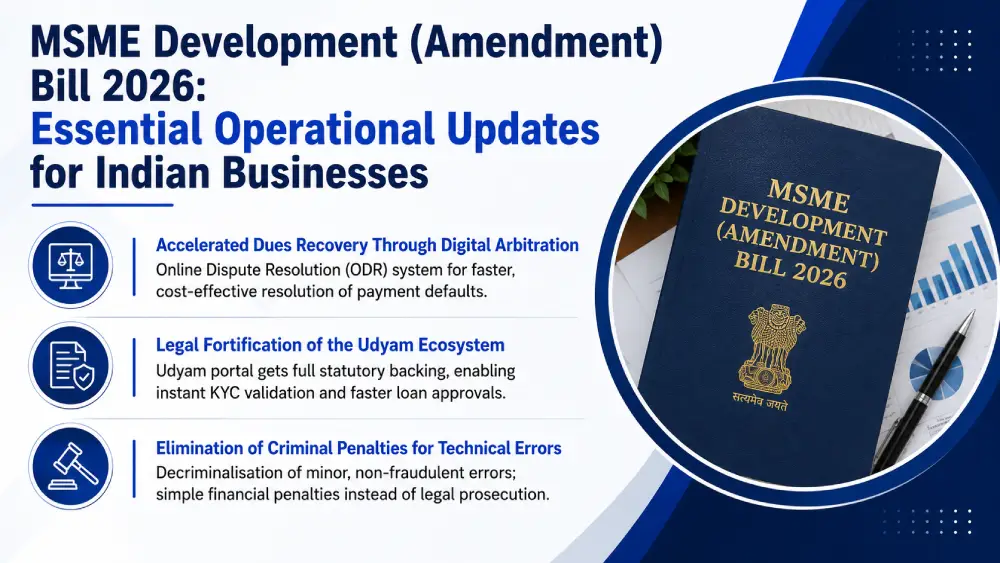
The legislative landscape for India’s small businesses is set for a structural transformation. The MSME Development (Amendment) Bill, 2026, will be in focus in the upcoming Monsoon Session of Parliament, following its recent formal clearance by the Union Cabinet.
Designed to overhaul outmoded regulatory structures, this upcoming legislation aims to dismantle chronic systemic hurdles — specifically severe working capital crunches, prolonged B2B recovery cycles, and complex administrative friction.
For entrepreneurs and promoters, the draft bill introduces three pivotal regulatory shifts:
Accelerated Dues Recovery Through Digital Arbitration
Extended credit periods and unrecovered invoices frequently affect corporate cash flow and jeopardise the survival of smaller enterprises. The 2026 framework tackles this by embedding an official Online Dispute Resolution (ODR) system directly into the statutory framework. This virtual mechanism will provide a streamlined, cost-effective alternative to overloaded physical facilitation councils, allowing entities to resolve commercial payment defaults through rapid, legally binding digital channels.
Legal Fortification of the Udyam Ecosystem
The amendment grants full statutory backing to the Udyam registration portal, transitioning it from a standard enrolment directory into a verified legal anchor. By establishing Udyam as the ultimate, tamper-proof repository for enterprise data, the government enables financial institutions to run instantaneous KYC and validation checks. This automated data sharing removes traditional paperwork bottlenecks, speeding up working capital loan evaluations.
Elimination of Criminal Penalties for Technical Errors
Moving towards a trust-based governance architecture, the bill systematically decriminalises minor regulatory infractions, which previously carried disproportionate legal liabilities. Promoters will no longer risk criminal prosecution or lengthy courtroom proceedings over simple administrative oversights or non-fraudulent bookkeeping mistakes. Instead, minor slips will face basic, predictable financial penalties, protecting owners from operational disruption.
Proactive Steps for Entrepreneurs
This legislative pivot emphasises digital integration and operational speed over bureaucratic oversight. To claim these incoming statutory benefits the moment they receive parliamentary assent, businesses must keep their corporate documentation, tax credentials, and Udyam data perfectly synchronised.
For all compliance services SetIndiaBiz offers you complete end to end solutions.
In This Article
Author Bio

Setindiabiz Editorial Team is a multidisciplinary collective of Chartered Accountants, Company Secretaries, and Advocates offering authoritative insights on India’s regulatory and business landscape. With decades of experience in compliance, taxation, and advisory, they empower entrepreneurs and enterprises to make informed decisions.
