
Overview: The Employees’ Provident Fund Organisation (EPFO) is reportedly preparing to roll out EPFO 3.0 by February 2027. The proposed upgrade will replace parts of its existing technology infrastructure with a Core Banking Solution and a more integrated digital platform.
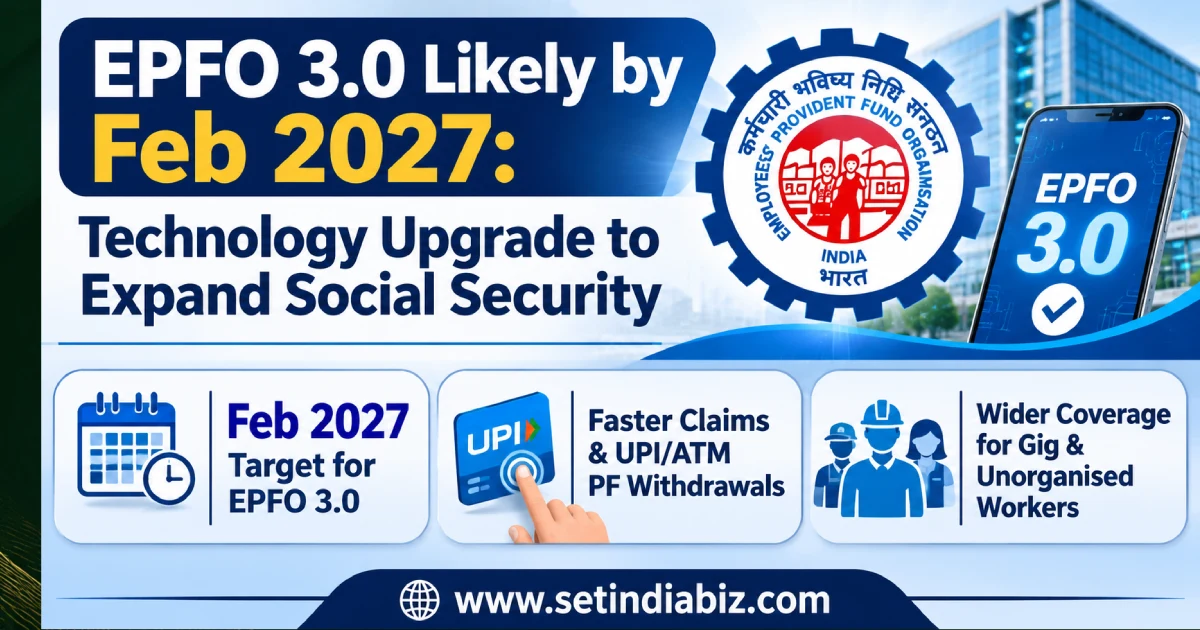
It is also expected to support faster claim processing and make provident fund contributions possible for gig and unorganised-sector workers through wider payment channels. The development marks another step in EPFO’s efforts to improve access to social security services.
EPFO 3.0 is expected to bring a major change in how the retirement fund body manages member accounts and delivers provident fund services. According to a Financial Express report, The Employees’ Provident Fund Organisation (EPFO) has finalised its technology partner and is preparing for the next stage of implementation. The February 2027 rollout is expected to be taken up at the next meeting of the Central Board of Trustees (CBT). However, EPFO has not yet announced an official launch date.
EPFO 3.0 to Introduce a New Technology Infrastructure
The CBT approved the EPFO 3.0 project framework at its 238th meeting on 13 thOctober 2025. The project is intended to give EPFO a technology platform with capabilities similar to the core banking systems used by banks.
The new infrastructure is expected to bring member services onto a more integrated platform, reduce dependence on manual processes and allow members to access services across regional offices. Implementation is planned in phases, with new schemes to be taken up first and existing members’ data brought into the system in a later phase.
The platform is also being designed for long-term expansion, with the capacity to manage records for up to 200 crore members over the next five decades, according to the report.
Faster Claims and Digital PF Withdrawals
The technology upgrade is aimed at reducing delays in claim processing. EPFO has already reported improvements under its Centralised IT Enabled System (CITES) 2.0. At the 240th CBT meeting on 19 November 2026, the Board was informed that auto-processed claims have increased from 39% to 71% of total processed claims. The average claim settlement time also fell from 11.15 days to 2.57 days, while the overall rejection ratio had declined from 23% to 7.82%.
These figures relate to CITES 2.0 and should not be mistaken for results achieved by EPFO 3.0, which is a separate technology upgrade.
EPFO 3.0 is expected to build on this digital shift. Planned facilities include PF withdrawals through ATMs and the Unified Payments Interface (UPI). UPI withdrawals could reportedly begin by December 2026, with technology trials nearing completion. No separate launch date has been reported for the ATM facility.
Wider Social Security Coverage for Gig Workers
The proposed platform is also expected to support provident fund contributions for gig and unorganised-sector workers. Multiple payment channels could make it possible to credit contributions to a worker’s Universal Account Number (UAN), even where the contributions do not come through a conventional employer payroll.
This would support the wider social security framework envisaged under the Code on Social Security, 2020. However, the contribution mechanism, eligibility conditions and operational arrangements will depend on the detailed rules and systems announced by the authorities.
Approval for EDLI Relief
The 240th CBT meeting in November had reortedly approved amendments to the Employees’ Deposit Linked Insurance (EDLI) Scheme, 2026. The changes provide a six-month window to eligible establishments to renew expired exemptions. They also provide relief from contributions, interest and penal damages for the verified transitional period, subject to the applicable conditions.
This is a separate employer-related decision taken at the November meeting, not a feature of the EPFO 3.0 technology project. Establishments with expired or pending EDLI exemption matters should review their records and watch for the detailed scheme amendments.
What Employers Should Keep in View
The proposed technology upgrade does not, by itself, change the existing EPF compliance requirements for employers. Businesses must continue to maintain accurate employee, wage and contribution records, complete UAN-related onboarding and deposit contributions within the prescribed timelines. Monthly Electronic Challan-cum-Return (ECR) filing also remains part of regular employer compliance.
Setindiabiz Support
Setindiabiz supports businesses with employer-side EPF registration, UAN allotment and employee onboarding, payroll-linked PF compliance and monthly ECR filing. Keeping these records and processes in order will remain important as EPFO moves towards a more integrated digital system.
FAQs
Media reports indicate that EPFO 3.0 may be rolled out by February 2027. The date has not yet been officially confirmed by EPFO.
The proposed upgrade includes a Core Banking Solution, an integrated digital platform, faster claim processing and support for wider provident fund contribution channels. UPI and ATM-based PF withdrawals are also among the planned facilities.
The proposed technology upgrade has not announced any change to the existing employer compliance requirements. Employers must continue to meet their EPF registration, employee onboarding, contribution and ECR filing obligations.
EPFO 3.0 is expected to make provident fund services more accessible and improve the efficiency of claim processing. Until the new system and related facilities are formally introduced, employers should continue following the existing EPF compliance requirements and monitor official EPFO notifications for changes affecting their responsibilities.
