
Overview: EPFO 3.0 may take another year to roll out after its tendering process is completed, according to a report published by Business Standard. The delay could affect the rollout of planned social-security schemes for gig, platform, unorganised and construction workers. Businesses should distinguish these planned developments from compliance requirements already prescribed under the Code on Social Security, 2020.
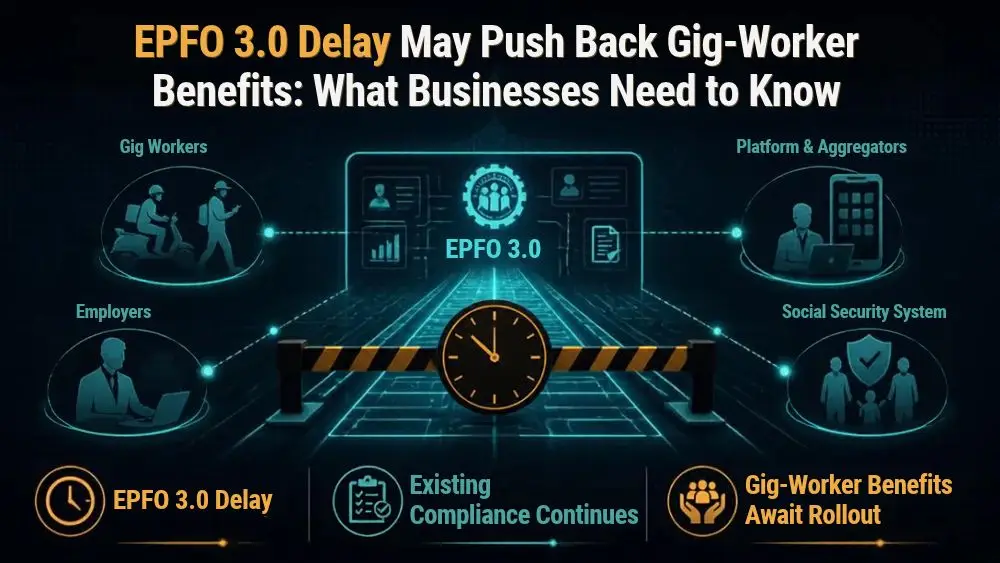
The Employees’ Provident Fund Organisation (EPFO) may face a further delay in implementing EPFO 3.0, its proposed technology overhaul. The request for proposal to select a technology partner was still being prepared, according to the Business Standard report. The delay raises questions about the timing of planned social-security benefits for gig and platform workers. However, businesses and aggregators should not assume that all related legal requirements depend on the new technology platform.
Why EPFO 3.0 Matters
EPFO 3.0 aims to modernise the provident fund body’s technology infrastructure and improve digital services. The Central Board of Trustees approved the framework in October 2025 and sought implementation within a year. The latest report suggests that implementation may take around a year after the tendering process is completed. No revised official launch date has been confirmed.
Existing Social-Security Requirements
The Code on Social Security, 2020 came into force on 21st November 2025. The Social Security (Central) Rules, 2026, were notified on 8th May, 2026.
The Rules prescribe registration and information-sharing requirements for gig and platform workers. Aggregators must register new workers through the designated portal in real time or on a daily basis, as prescribed.
However, the start date for aggregator contributions under Section 114(5) of the Code must be notified separately by the Central Government. Businesses should distinguish these existing requirements from the commencement of contribution payments.
What Employers and Aggregators Should Do
Businesses should continue to meet their applicable statutory obligations.
- Employers: Maintain payroll records and meet applicable provident fund, Employees’ State Insurance, tax deduction and other statutory requirements.
- Aggregators: Maintain accurate gig-worker records, update registrations and track official notifications on contribution requirements.
- Both: Keep payment records and supporting documents ready for review.
The EPFO 3.0 delay should not be treated as a general suspension of existing compliance duties.
Setindiabiz Support
Payroll and statutory compliance require regular attention, even when regulatory technology projects face delays. Setindiabiz professionals support businesses with payroll processing, statutory records, applicable provident fund and Employees’ State Insurance compliance, and recurring employer obligations. Our team manages these compliance requirements so business owners can focus on running and growing their businesses.
FAQs
EPFO 3.0 is a proposed technology overhaul aimed at modernising EPFO services and improving digital access to provident fund facilities.
No revised official launch date has been confirmed. According to a report, implementation may take around a year after the tendering process is completed.
No. Employers must continue applicable payroll and statutory compliance. The EPFO 3.0 delay does not automatically suspend existing legal obligations.
The Code on Social Security, 2020 provides that the commencement date for aggregator contributions must be notified separately by the Central Government. Aggregators should check for the relevant notification and continue meeting applicable registration and information-sharing requirements.
