
There is a promising regulatory shift for Indian cross-border merchants, promising a significantly more seamless and efficient operating environment.
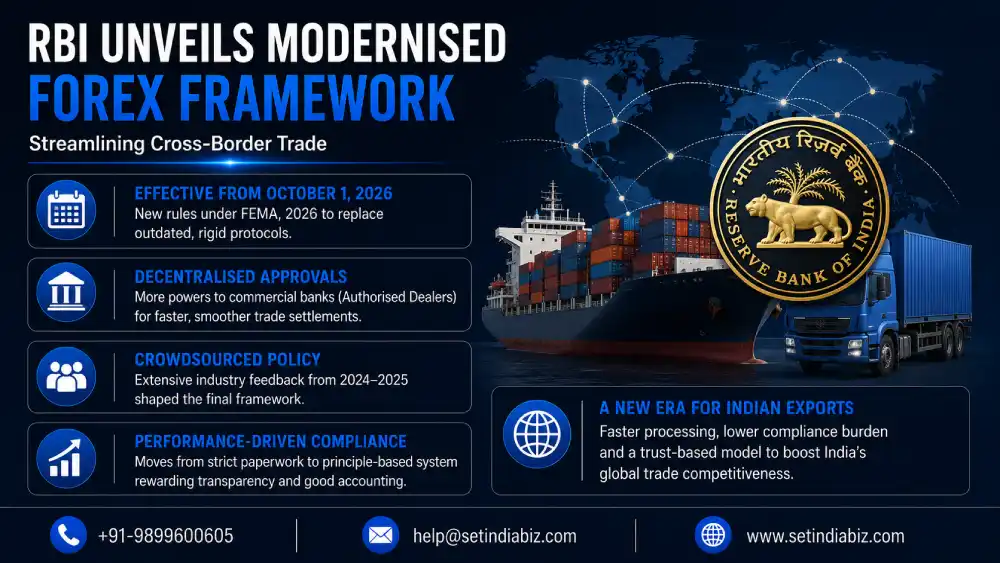
The Reserve Bank of India has introduced its updated cross-border commerce architecture under the Foreign Exchange Management Regulations, 2026. Scheduled to take effect on October 1, 2026, these rules will replace rigid, older protocols with a flexible, principle-based model built for the modern global economy.
The regulations will cut down administrative overhead. The framework specifically aims to benefit small-to-medium enterprises and bootstrapped exporters who often struggle with complex cross-border compliance.
Crucial Adjustments for Global Merchants
- Decentralised Approvals: Commercial banks (Authorised Dealers) will get greater operational autonomy. This means fewer bureaucratic bottlenecks and significantly faster clearance speeds for inbound and outbound trade settlements.
- Crowdsourced Policy: The updated framework reflects extensive refining, incorporating practical industry feedback gathered during public stakeholder consultations throughout 2024 and 2025.
- Performance-Driven Compliance: By moving away from hyper-specific paperwork mandates, the new guidelines reward transparent corporate accounting, making global scaling easier for emerging brands.
A New Era for Indian Exports
Historically, complex documentation loops prolonged international transaction timelines. This transition to a principle-based system indicates that India is moving toward a trust-based economic model. By empowering local banks to handle trade documentation more dynamically, the country is positioning its import-export ecosystem to match global digital trade velocities.
Frequently Asked Questions
When do the new Foreign Exchange Management Trade Regulations take effect?
What exactly does a “principle-based framework” mean for my business?
How will small exporters and MSMEs benefit from these changes?
What role do Authorised Dealers (ADs) play under the new rules?
Navigate the Transition with Setindiabiz
Adapting to a brand-new regulatory landscape requires proactive operational updates. Setindiabiz helps businesses seamlessly transition into this new framework. From assessing transactional structures and upgrading trade documentation to providing end-to-end FEMA advisory, our experts ensure your business remains fully compliant and audit-ready well ahead of the October deadline.
In This Article
Author Bio

Setindiabiz Editorial Team is a multidisciplinary collective of Chartered Accountants, Company Secretaries, and Advocates offering authoritative insights on India’s regulatory and business landscape. With decades of experience in compliance, taxation, and advisory, they empower entrepreneurs and enterprises to make informed decisions.
